How Summer Camp Boosts Your Child’s Confidence and Independence
Every parent watches their child struggle with new challenges. Maybe your son hesitates before speaking up in class. Perhaps your daughter clings to your hand when meeting new people. These moments of uncertainty reveal a deeper need: children require safe spaces to grow beyond their comfort zones and discover their capabilities.
Summer camp creates exactly this environment. Away from familiar routines and protective parents, kids face real-world situations that demand courage, decision-making, and self-reliance. The result transforms hesitant children into confident young people ready to tackle life independently.
Why Traditional Environments Limit Growth
School and home provide structure and security. Children follow schedules, receive constant guidance, and rarely make independent choices. Teachers manage classrooms of 20 to 30 students, leaving little room for individual exploration. Parents naturally step in to solve problems, preventing kids from developing their own solutions.
This protective bubble feels safe but creates dependency. Children learn to wait for adult direction rather than trust their instincts. They avoid risks because someone always catches them before they fall. The comfort zone becomes a cage that restricts personal growth.
Camp breaks this pattern entirely. Counselors facilitate rather than control. Kids choose activities, form friendships without parental input, and solve conflicts independently. The outdoor learning for kids happens through direct experience, not passive observation.
Also Read : Preschool Science Activities: Simple Experiments That Spark Young Minds
Building Confidence Through Real Challenges
Mastering New Skills
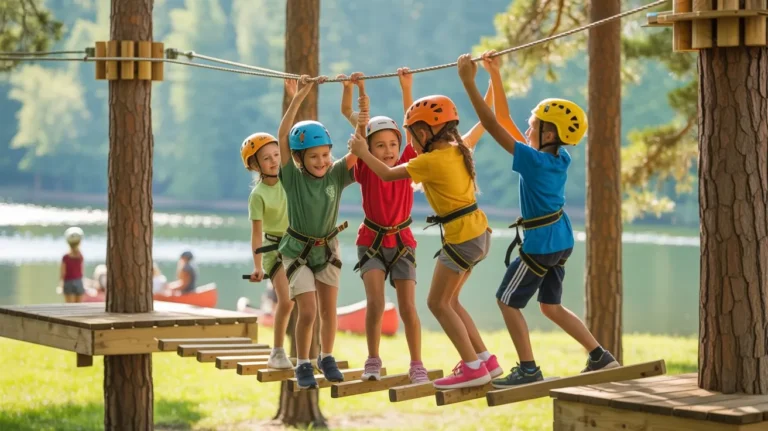
Camp introduces activities most children never attempt at home. Rock climbing walls tower above nervous first-timers. Kayaks tip in shallow water. Archery targets seem impossibly distant. Each challenge appears daunting initially.
Then something remarkable happens. A counselor demonstrates the technique. The child tries and fails. They try again with adjusted form. On the third or fourth attempt, success arrives. The arrow hits the target. The kayak glides smoothly. The climbing wall surrenders to determined hands.
These victories matter profoundly. Children realize that persistence overcomes obstacles. They discover abilities they never knew existed. Confidence building for kids occurs naturally when they accomplish tasks previously considered impossible.
Making Independent Decisions
Home life often removes choice from children. Parents select meals, schedule activities, and plan entire days. Kids follow along without exercising their decision-making muscles.
Camp flips this dynamic. Campers choose between swimming and arts and crafts. They decide whether to participate in talent shows or remain audience members. Friendship groups form through genuine connection rather than geographic convenience or parental arrangement.
Each decision carries consequences. Skipping breakfast leads to hunger during morning activities. Choosing quiet time over sports means missing the big game. These lessons teach responsibility without harsh penalties. Kids learn that their choices shape their experiences.
Independence in children grows when they control their own narrative. They become authors of their stories rather than characters in someone else’s script.
Navigating Social Situations
Every cabin becomes a mini society. Seven or eight kids share space, resources, and time. Conflicts emerge naturally. Someone snores. Another person takes too long in the bathroom. Personalities clash over game rules or activity preferences.
Adults do not rush in to mediate every disagreement. Counselors observe and guide but encourage campers to resolve issues themselves. Children learn to compromise, communicate needs clearly, and understand different perspectives.
Social skills at summer camp develop through necessity. Kids discover that kindness opens doors while selfishness closes them. They practice empathy when bunkmates feel homesick. They celebrate others’ successes and offer comfort during setbacks.
These interactions create emotional intelligence that textbooks cannot teach. Children return home better equipped to handle peer relationships, classroom dynamics, and family interactions.
Also Read: What Should I Do If My Child Refuses to Join Group Activities at Camp?
Fostering Independence Away From Home
Self-Care Skills
Parents handle countless daily tasks children barely notice. Laundry appears clean in drawers. Meals materialize at appropriate times. Lost items somehow find their way back.
Camp eliminates this invisible support system. Campers manage their belongings, organize their spaces, and track their schedules. They shower independently, brush teeth without reminders, and dress appropriately for activities and weather.
These life skills from summer camp sound mundane but prove transformative. An eight-year-old who packs their own bag demonstrates planning skills. A ten-year-old who remembers sunscreen shows self-awareness. A twelve-year-old who organizes cabin cleanup exhibits leadership.
Children feel proud accomplishing tasks previously handled by adults. This pride fuels further independence. They start asking “Can I do this myself?” instead of defaulting to “Will you do this for me?”
Problem-Solving Without Parental Backup
Home provides immediate solutions. Kids face problems and parents solve them within minutes. This efficiency prevents frustration but also prevents growth.
Camp introduces productive struggle. Campers forget items in cabins and must retrieve them during breaks. They struggle with challenging craft projects and must persevere or seek peer help. Equipment malfunctions and requires creative fixes.
Counselors resist the urge to immediately rescue struggling campers. They ask guiding questions: “What have you tried already?” “Who might help you figure this out?” “What could you do differently?”
This approach teaches resourcefulness. Children learn to assess situations, consider options, and implement solutions. They discover that problems rarely require adult intervention. Their own minds contain the tools needed for most challenges.
Developing Self-Advocacy
Many children struggle to express needs clearly. They feel uncomfortable speaking up in groups. They accept unfavorable situations rather than requesting changes.
Camp requires self-advocacy. Campers must inform counselors about dietary restrictions, medical needs, or emotional struggles. They request equipment, ask questions during instructions, and voice preferences about activities.
This communication happens repeatedly throughout each day. Children practice articulating thoughts until it becomes natural. They learn that asking for help demonstrates strength, not weakness. They discover that clearly expressing needs leads to better outcomes than suffering silently.
Personal growth for children accelerates when they find their voices. Kids who master self-advocacy at camp transfer this skill to school presentations, family discussions, and peer interactions.
The Long-Term Impact of Summer Camp Experiences
Transferable Life Skills
Summer camp experiences do not exist in isolation. The confidence gained during wilderness hikes translates to classroom presentations. The independence developed while managing cabin responsibilities appears in homework completion and morning routines.
Parents consistently report changes in their returning campers. Children take initiative rather than waiting for direction. They volunteer for challenging tasks instead of avoiding them. They bounce back from disappointments faster because camp taught them that setbacks precede comebacks.
Skills learned at summer camp compound over time. A child who learned teamwork through cooperative games applies those lessons to group projects. A camper who developed patience while fishing exercises that patience during difficult homework assignments.
Building Resilience for Future Challenges
Life presents increasing challenges as children age. Academic demands intensify. Social dynamics grow more complex. Personal responsibilities expand continuously.
Camp-tested kids approach these challenges differently. They have already survived being away from parents. They have already recovered from failed attempts and embarrassing moments. They carry proof that they can handle difficult situations.
This resilience becomes their foundation. When middle school feels overwhelming, they remember navigating camp’s first confusing day. When high school friendships shift, they recall forming new connections each summer. When college looms intimidating, they recognize it as another adventure similar to their first overnight camp experience.
Child development programs recognize that resilience matters more than natural talent. Children who bounce back develop further than those who avoid challenges altogether. Camp provides countless opportunities to fall, rise, and try again.
Creating Lasting Confidence
The summer camp benefits extend far beyond the camp session itself. Children return home changed. They stand taller. They speak more clearly. They approach new situations with curiosity rather than fear.
This transformation becomes self-reinforcing. Success breeds confidence, which encourages risk-taking, which leads to more success. The positive cycle continues long after departure from camp.
Years later, young adults credit summer camp for teaching them courage. They remember specific moments when they overcame fear or accomplished something previously impossible. These memories become touchstones during challenging times.
Parents invest in kids summer activities seeking immediate joy and entertainment. They receive something far more valuable: children equipped with confidence, independence, and skills that last a lifetime.
Making the Most of the Camp Experience
Choosing the Right Program
Not all camps provide equal opportunities for growth. Programs focused solely on entertainment may miss developmental benefits. Parents should research options carefully.
Look for camps emphasizing skill development and personal challenges. Programs offering diverse activities allow children to discover hidden talents. Smaller cabin groups ensure individual attention and meaningful relationships.
<a href=”https://campwilderness.co.uk/blog/how-summer-kids-camps-boost-confidence-and-independence/” target=”_blank”>Child development experts recommend camps that balance structure with freedom</a>, providing safe boundaries while encouraging independent exploration and decision-making.
Consider session length thoughtfully. First-time campers might benefit from shorter sessions. Older children often thrive during extended programs that allow deeper skill development and stronger friendships.
Preparing Your Child
Parents can enhance camp benefits through proper preparation. Discuss expectations openly. Explain that challenges will arise and that overcoming them builds strength. Share your own stories of conquering fears or learning difficult skills.
Involve children in packing and planning. This participation begins the independence process before camp even starts. Let them make age-appropriate decisions about what to bring and which activities interest them most.
Resist the urge to over-communicate during camp. Frequent calls or messages undermine independence. Trust that counselors will contact you if genuine problems arise. Give your child space to fully immerse in the experience.
Supporting Growth After Camp
The learning does not end when camp concludes. Parents should reinforce the independence and confidence children developed. Assign new responsibilities at home that reflect their demonstrated capabilities.
Encourage children to maintain camp friendships. These relationships remind them of their capable camp selves. When school challenges arise, remind them of obstacles they overcame during summer.
Consider making camp an annual tradition. Each summer builds on previous growth. Returning campers often become counselors-in-training, completing the cycle by helping younger children develop their own confidence and independence.
Conclusion
Summer camp offers far more than fun activities and temporary childcare. These programs provide transformative experiences that shape character and build essential life skills. Children arrive nervous and dependent. They depart confident and capable.
The investment in summer camp yields returns that compound throughout childhood and beyond. Your child will face countless challenges in the coming years. Camp prepares them not by eliminating obstacles but by proving they possess the courage, creativity, and resilience to overcome whatever comes their way.
The question is not whether summer camp boosts confidence and independence. Research, counselor observations, and parent testimonials confirm this consistently. The real question is whether you want your child to discover their full potential in an environment designed specifically for growth.
Give them that chance. Send them to camp. Watch them return transformed.
FAQ: Summer Camp Confidence and Independence
Q: At what age should my child start attending summer camp to build confidence?
Most children benefit from day camps starting around age 5 or 6, while overnight camps work best for ages 8 and up. Younger children develop social skills and basic independence, while older kids tackle bigger challenges that significantly boost confidence and self-reliance.
Q: How long does it take for children to show improved confidence after summer camp?
Many parents notice changes within days of their child returning home. Kids demonstrate increased independence in daily tasks, speak up more confidently, and show greater willingness to try new activities. These behavioral shifts typically become more pronounced over several weeks as children integrate camp lessons.
Q: What if my shy child struggles to make friends at summer camp?
Counselors specifically train to help reserved children connect with peers through structured activities and small group interactions. Most shy kids find their social confidence grows naturally as they share experiences, accomplish challenges together, and realize others face similar uncertainties about making friends.
Q: Can summer camp really teach life skills my child will use later?
Absolutely. Time management, conflict resolution, self-care routines, teamwork, and problem-solving learned at camp transfer directly to school, home, and future workplace environments. Children who attend camp consistently demonstrate stronger executive function skills and greater emotional resilience throughout their academic careers.