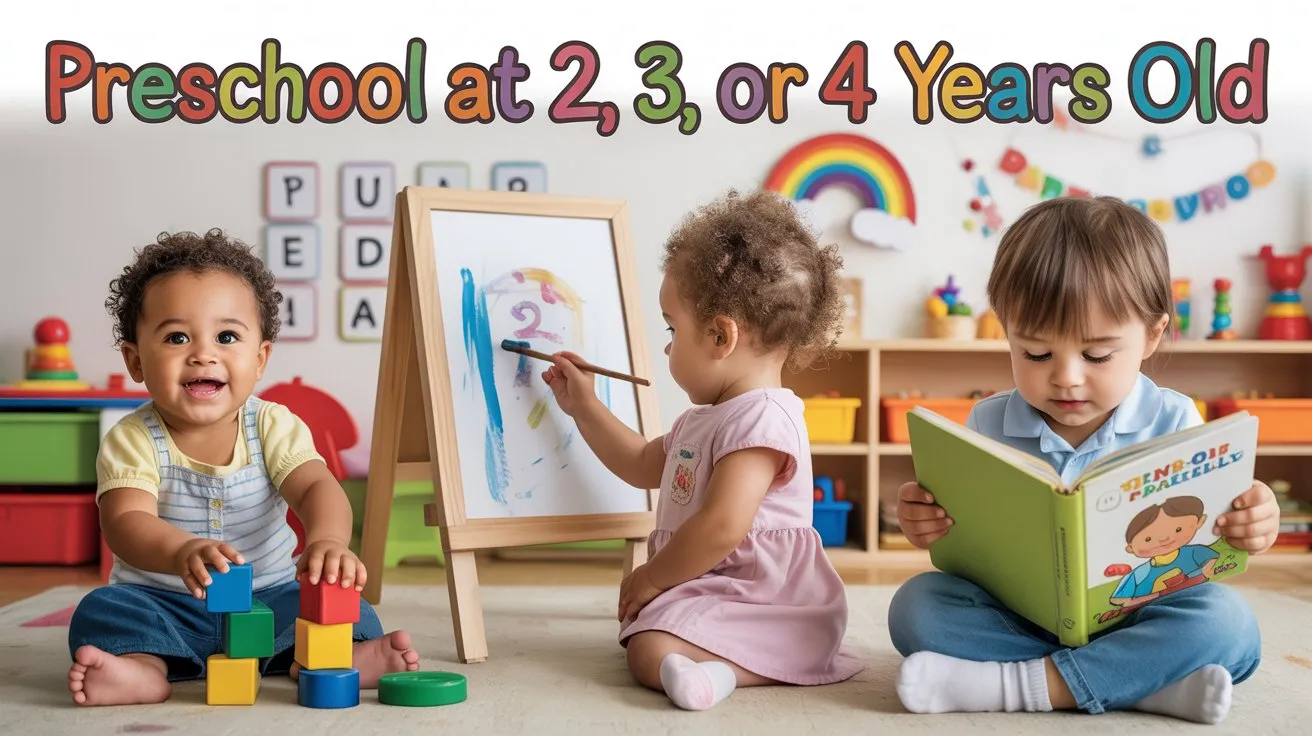
Preschool at 2, 3, or 4 Years Old: Which Age Is Actually Better?
You’ve been eyeing that adorable preschool down the street, watching other parents drop off their little ones with bright backpacks and lunchboxes. But now you’re wondering: Is my child ready? Should I wait another year? If you’re wrestling with the question of when to start preschool, you’re not alone. The decision about preschool at 2, 3, or 4 years old is one that keeps many parents awake at night—and for good reason.
Here’s the truth that might surprise you: there’s no universal “perfect age” for preschool. While most children begin between ages 3 and 4, your child’s individual development matters far more than the number on their birth certificate. Let’s explore what really makes a child ready for this exciting milestone and help you make the best decision for your family.
Understanding the Preschool Age Question
When parents ask about the ideal preschool starting age, they’re really asking two questions: What does the calendar say? and What does my child need? The calendar might tell you that preschool programs typically accept children between 2 and 5 years old. But your child’s unique developmental timeline tells a much more important story.
Most children start preschool between ages 3 and 4, but the most important factor isn’t the calendar—it’s when a child demonstrates developmental milestones and emotional readiness that support learning in a social environment. Think of preschool readiness less like reaching a specific birthday and more like learning to ride a bike—some kids are zooming around at 3, while others need a bit more time to find their balance.
Starting Preschool at Age 2: The Early Bird Approach
Can a 2-year-old really thrive in preschool? The answer is: it depends. Some children show remarkable readiness at this young age, while others benefit from waiting a bit longer.
What Two-Year-Old Preschool Looks Like
Programs designed for 2-year-olds look quite different from traditional preschool classrooms. They typically feature smaller class sizes, shorter days, and a higher ratio of teachers to students. The focus is primarily on socialization, sensory exploration, and gentle separation from parents rather than structured learning activities.
Many programs accept 2-year-olds, though they typically require children to be potty-trained and able to separate from parents. These programs often include more individualized attention and flexibility to accommodate the varying developmental stages you’ll find in this age group.
Pros of Starting at Age 2
Early Socialization: Toddlers who start preschool at 2 get a head start on learning to interact with peers. They begin understanding concepts like sharing, taking turns, and navigating social situations earlier than their stay-at-home counterparts.
Structured Routine: Two-year-olds thrive on predictability. A consistent preschool schedule can help establish healthy routines around meals, naps, and play that benefit the entire family.
Language Development: Being around other children and adults provides rich opportunities for language exposure and practice. Many 2-year-olds experience vocabulary explosions during their first year of preschool.
Easier Transition: Starting younger can sometimes mean less resistance. Two-year-olds may adapt more readily to new situations than older children who have become more attached to their home routines.
Cons of Starting at Age 2
Separation Anxiety: Two-year-olds are still deeply bonded to their primary caregivers. Extended separations can be emotionally challenging for both parent and child, potentially leading to stress that outweighs the benefits.
Limited Self-Care Skills: Many 2-year-olds aren’t fully potty-trained yet. They may need help with hand-washing, eating, and managing their belongings—skills that can create additional challenges in a group setting.
Shorter Attention Span: The ability to focus on activities, follow group instructions, or participate in circle time is still emerging at this age. Two-year-olds often need more redirecting and individualized support than older preschoolers.
Immune System Exposure: Younger children in group care settings tend to get sick more frequently as their immune systems are still developing. This can mean more missed days and disrupted schedules.
Starting Preschool at Age 3: The Sweet Spot for Many
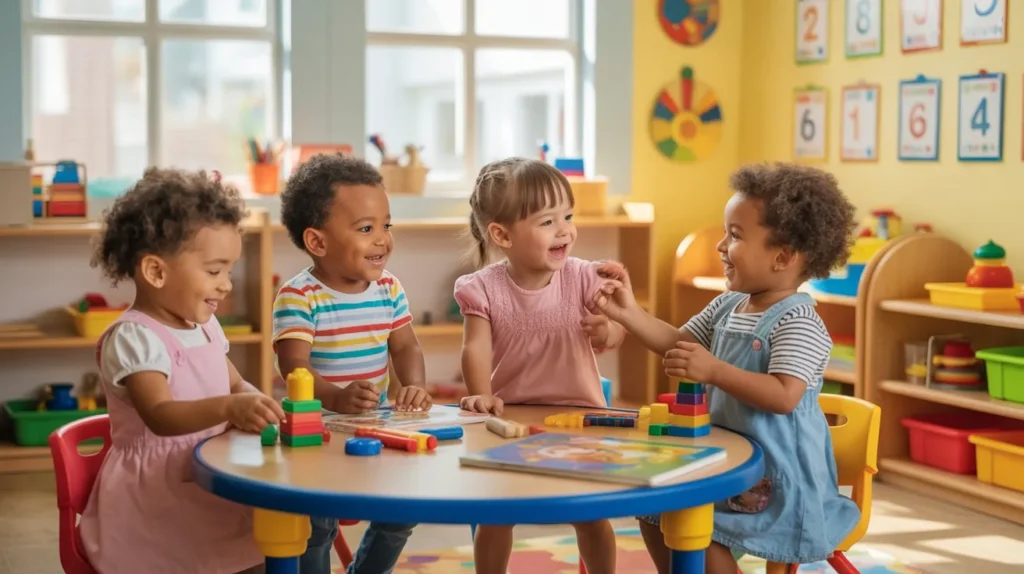
For countless families, age 3 emerges as the goldilocks zone—not too early, not too late, but just right. This is when preschool at 2, 3, or 4 years old truly becomes a personalized decision based on your child’s unique development.
Why Age 3 Works Well
At 3, many children have developed the foundational skills that make preschool more enjoyable and beneficial. Many children start preschool between the ages of 3 and 5, typically around the age that most kids are developmentally ready for a classroom setting. Let’s look at what makes this age particularly well-suited for preschool.
Developmental Readiness at Age 3
Communication Skills: Most 3-year-olds can express their basic needs verbally. They might say “I’m thirsty” or “I need help” rather than just crying or becoming frustrated. Kids need to express themselves in a way that an unfamiliar adult can understand, whether with words, gestures, or with the help of technology.
Self-Care Progress: By 3, many children have made significant strides in potty training, hand-washing, and feeding themselves. While they still need some support, they’re more independent than they were at 2.
Social Engagement: Three-year-olds begin transitioning from parallel play (playing alongside other children) to more interactive play. They start to genuinely engage with peers, though conflicts over sharing are still common and completely normal.
Emotional Regulation: While 3-year-olds certainly still have big feelings, many can begin to calm themselves with adult support. They’re starting to understand that parents will return after separation, making drop-off time less traumatic.
The Benefits of Age 3 Enrollment
Optimal Learning Window: Three-year-olds are naturally curious and eager to explore. Their “why?” questions seem endless, making this an ideal time to introduce structured learning through play.
Kindergarten Preparation: Starting at 3 gives children two full years to develop the social, emotional, and academic skills they’ll need for kindergarten. This longer runway can reduce stress and set them up for success.
Balanced Independence: Three-year-olds are independent enough to participate in group activities but still young enough to be flexible and adaptable. They can follow simple directions and try new things with enthusiasm.
Social Skill Development: With two years before kindergarten, 3-year-olds have plenty of time to practice crucial social skills like conflict resolution, cooperation, and friendship-building in a supportive environment.
Starting Preschool at Age 4: The Late Bloomer Advantage
Waiting until age 4 to start preschool might raise eyebrows on the playground, but for many children, it’s the perfect choice. There’s no shame in giving your child extra time at home—in fact, it can come with unique advantages.
Why Some Families Choose Age 4
Extended Home Time: Some parents value the additional year of one-on-one bonding time. Children who stay home longer often develop deep, secure attachments and have more individualized learning experiences tailored to their interests.
Advanced Readiness: Four-year-olds typically demonstrate more advanced self-help skills, communication abilities, and emotional regulation than younger preschoolers. This can translate to fewer struggles with separation, bathroom independence, and classroom participation.
Maturity Benefits: Starting preschool at 4 means your child will often be among the older, more mature students in their class. Some children benefit from the extra year of social and emotional development that comes with starting at 4. This can boost confidence and leadership opportunities.
Cost Savings: Let’s be practical—one less year of preschool tuition can save families thousands of dollars. For some families, this financial flexibility is a significant factor in their decision.
Potential Considerations
Shorter Preparation Time: With only one year (or sometimes less) before kindergarten, 4-year-olds have a compressed timeline to develop classroom skills. However, many adapt quickly and catch up to their peers with no issues.
Social Experience Gap: Children who start later may have less exposure to group dynamics and peer interaction. If your child hasn’t participated in playgroups or other social activities, they might need extra support initially.
Peer Relationships: Starting as a 4-year-old means potential friendships will be shorter before the transition to kindergarten. However, quality often matters more than quantity when it comes to early friendships.
The Real Question: Is YOUR Child Ready?
Here’s where we get to the heart of the matter. The question of preschool at 2, 3, or 4 years old can’t be answered without looking at your specific child’s readiness signs. Age is just one piece of a much larger puzzle.
Key Readiness Indicators
Separation Comfort: Can your child say goodbye to you without extreme distress? A few tears on the first day are normal, but children who are ready for preschool generally recover within 10-15 minutes and engage with activities. If your child experiences severe anxiety lasting hours, they might need more time.
Communication Abilities: Kids who are ready for preschool can follow one- or two-step directions like “hang up your coat” or “sit on the rug”. They don’t need perfect speech, but they should be able to make their basic needs understood.
Social Interest: Watch how your child interacts at the park, library, or playdates. Do they show interest in other children? Are they curious about what peers are doing? Even if they’re not yet skilled at sharing or taking turns, genuine interest in others is a positive sign.
Physical Independence: Can your child wash their hands with minimal help? Put on their shoes? Handle snack time without constant adult assistance? These self-care skills make the preschool day smoother for everyone.
Curiosity and Focus: If your child asks questions, wants to try new things, or enjoys picture books, preschool can help nurture that curiosity. Look for children who can sit through a short story or work on a simple puzzle for several minutes.
Emotional Awareness: Children ready for preschool are beginning to recognize that others have feelings too. They might not always respond appropriately, but they’re starting to understand concepts like “gentle hands” or “inside voices.”
The PIECES Framework
One helpful way to assess readiness is using the PIECES framework, which stands for:
- Predictability: Does your child do well with routines and transitions?
- Independence: Can they work alone on simple tasks for a few minutes?
- Expression: Can they communicate their needs effectively?
- Concentration: Can they focus on an activity or story briefly?
- Emotional regulation: Can they separate from you without excessive distress?
- Social participation: Will they engage in group activities?
If most of these elements are in place, your child is likely ready for preschool, regardless of their specific age.
Special Considerations That Impact the Decision
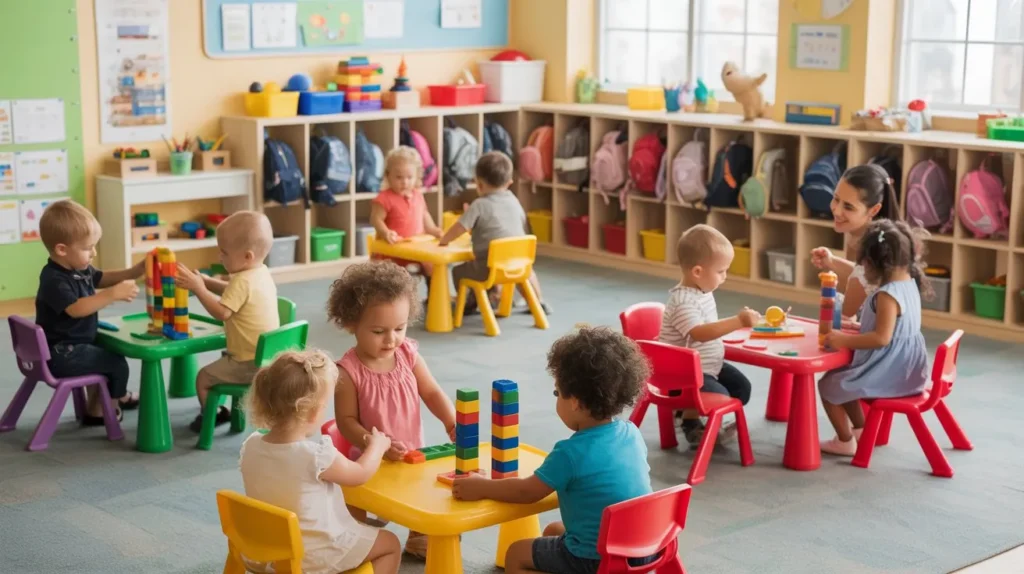
Beyond developmental readiness, several practical factors influence the timing decision for starting preschool.
Family Circumstances
Work Schedules: Parents who work outside the home may need childcare solutions regardless of their child’s developmental readiness. In these cases, choosing a nurturing preschool program that accommodates younger or less ready children becomes essential.
Sibling Schedules: Having an older sibling already attending preschool can sometimes ease the transition for younger children. They’re already familiar with the routine and excited to be “big kids” like their siblings.
Financial Realities: Preschool is expensive, and not every family can afford multiple years of tuition. There’s absolutely no shame in waiting until age 4 to keep costs manageable—your child won’t be behind because of it.
Your Child’s Personality
Extroverted vs. Introverted: Outgoing children who crave social interaction might be ready earlier than children who are more reserved or cautious in new situations. Both personality types can thrive in preschool, but they might need different approaches and timing.
High Energy vs. Calm: Active children who need lots of stimulation might benefit from the structure and activity variety preschool offers. Calmer children might be perfectly content with a slower-paced home environment for longer.
Sensitive vs. Resilient: Highly sensitive children who are easily overwhelmed by noise, chaos, or new situations might need extra time before tackling a busy preschool classroom. There’s nothing wrong with being sensitive—it’s simply a trait to consider.
Program Options in Your Area
The preschool programs available in your community can significantly impact your decision. Some areas offer:
- Half-day programs: Perfect for easing into preschool life
- Two or three-day-per-week options: Great for younger or less ready children
- Parent co-op models: Excellent for children who need more gradual separation
- Transition programs: Specifically designed for 2-year-olds or first-time students
Research what’s available in your area and choose a program that matches your child’s needs rather than forcing them to adapt to a program that might not be the right fit.
Making the Decision: A Step-by-Step Guide
Feeling overwhelmed? Let’s break down the decision-making process into manageable steps.
Step 1: Observe Your Child
Spend a few weeks really watching your child in different situations. How do they handle playgroups? Can they focus during story time at the library? Do they enjoy being around other children, or do they prefer adult company? Take notes on the readiness indicators we’ve discussed.
Step 2: Visit Potential Programs
Schedule tours at several preschools in your area. During your visits, notice:
- How teachers interact with students
- The general noise level and activity flow
- How current students seem to be engaging
- Whether the environment feels warm and welcoming
Bring your child along if possible. Their reaction can provide valuable insight into whether they’re ready for this type of setting.
Step 3: Consult the Experts
Talk to your pediatrician about your child’s development. They can offer objective insights about whether your child is on track with typical milestones.
Step 4: Trust Your Gut
As a parent, you know your child better than anyone. If something feels off about the timing—whether you feel they’re not quite ready or you’re holding them back unnecessarily—trust that instinct. You can always start preschool and pause if it’s not working, or wait and begin when it feels right.
Step 5: Create a Trial Period
Many programs offer transition options like:
- Shortened days for the first few weeks
- Parent-present sessions
- Gradual increase in attendance days
These flexible arrangements can help both you and your child ease into the experience while gauging readiness.
What If You Choose Wrong?
Here’s some reassuring news: choosing the “wrong” time to start preschool isn’t the disaster you might fear. Children are remarkably adaptable, and there are solutions if your initial timing doesn’t work out perfectly.
If You Start Too Early
If your child struggles significantly with preschool—showing signs of severe stress like regression in potty training, sleep problems, or persistent distress at drop-off—you have options:
- Take a break: Many programs will hold your child’s spot if you need to pause for a few months
- Reduce attendance: Drop from five days to two or three days per week
- Switch programs: Find a smaller, more nurturing environment better suited to younger children
- Accept that it’s not the right time: There’s no shame in saying “we tried, and we’ll try again next year”
If You Start Too Late
Worried that waiting until 4 means your child will be behind? Relax. Children who start preschool later often catch up quickly. Children who hit appropriate milestones thrive with the earlier start at 3, while others benefit from starting at 4. What matters most is finding the right fit for your individual child.
If you’re concerned about kindergarten readiness:
- Look for intensive one-year preschool programs
- Supplement with playgroups and socialization opportunities
- Work on readiness skills at home
- Consider summer programs to bridge the gap
Life at Different Starting Ages: What to Expect
Let’s paint a picture of what preschool life typically looks like at each starting age, so you know what you’re getting into.
A Day in the Life: Two-Year-Old Preschool
8:45 AM: Drop-off involves lots of tears and clinging to mom’s leg. Teachers gently redirect with a favorite toy.
9:00 AM: Circle time lasts just five minutes. Songs, simple movements, and a very short story keep attention.
9:30 AM: Free play in centers. Teachers guide social interactions: “Can you give Maya a turn?” Parallel play dominates—children near each other but not truly playing together.
10:00 AM: Snack time. Several children need help opening containers. One child is still working on using a spoon rather than fingers.
10:30 AM: Art project. Teachers do most of the work while children explore paint and glue. It’s messy, sensory fun with no expectations of a finished product.
11:15 AM: Pick-up time arrives. Some children are thrilled to see parents; others are having such fun they don’t want to leave.
A Day in the Life: Three-Year-Old Preschool
8:45 AM: Drop-off goes fairly smoothly. A few children need reassurance, but most wave goodbye and run to play with friends.
9:00 AM: Circle time lasts 15 minutes. Children sing songs with motions, discuss the weather, and listen to a story. Most can sit and participate, though wiggling is common.
9:30 AM: Center time. Children choose between dramatic play, blocks, art, and sensory activities. Interactions are more collaborative: “Let’s build a castle together!”
10:15 AM: Snack time. Most children can open their lunches and manage eating independently. Conversations flow about favorite foods and pets.
10:45 AM: Structured activity—maybe painting, play dough, or beginning letter recognition games. Children can follow multi-step directions: “Put on your apron, choose your colors, and paint a picture.”
11:30 AM: Outdoor play. Children run, climb, and engage in active games together. Teachers facilitate turn-taking on popular equipment.
12:00 PM: Pick-up. Children show off their artwork and share stories about their day.
A Day in the Life: Four-Year-Old Preschool
8:45 AM: Drop-off is quick. Many children skip into the classroom calling greetings to friends.
9:00 AM: Circle time lasts 20-25 minutes. Children discuss the calendar, weather, and special events. They take turns sharing news from home. The teacher introduces a new letter with multiple activities.
9:45 AM: Structured learning activities. Small groups rotate through literacy, math, science, and art centers. Children are engaged and focused for 10-15 minute periods.
10:30 AM: Snack time doubles as social time. Children have full conversations about their interests, families, and ideas. Friendships are clearly forming.
11:00 AM: Project time. Children work on longer-term activities—perhaps building a class structure with blocks, creating a mural together, or conducting a simple science experiment as a group.
11:45 AM: Outdoor play features more complex games. Children create elaborate scenarios together: “You be the doctor, and I’ll be the sick puppy.”
12:15 PM: Pick-up includes children eagerly sharing specific details about what they learned and created.
Supporting Your Child’s Preschool Success
Regardless of when your child starts preschool, you can help ensure a positive experience with these strategies.
Before Preschool Starts
Read Books About Preschool: Choose age-appropriate books that show children having fun at school. Reading these together helps your child understand what to expect.
Practice Separation: If your child hasn’t spent much time away from you, start building this skill. Leave them with a trusted caregiver for short periods, gradually increasing the time apart.
Work on Self-Help Skills: Practice hanging up coats, washing hands, opening lunch containers, and using the bathroom independently. These skills boost confidence and ease daily routines.
Visit the School: Take your child to see their classroom before the first day. Meet their teacher, explore the play areas, and find the bathroom. Familiarity reduces anxiety.
Establish Routines: Start practicing your morning routine weeks before school begins. Consistent wake-up times, breakfast schedules, and getting-ready sequences make the transition smoother.
Talk Positively: Your attitude matters enormously. Express excitement and confidence about preschool rather than anxiety. Children pick up on parental worry.
During the Transition
Keep Goodbyes Brief: Long, emotional goodbyes often increase anxiety. Create a quick, consistent goodbye routine and trust the teachers to comfort your child after you leave.
Stay Consistent: Don’t pull your child out at the first sign of difficulty. Unless there are serious red flags, give the adjustment period time to work—typically 2-4 weeks.
Communicate with Teachers: Share information about your child’s personality, preferences, and challenges. Teachers can use these insights to support your child effectively.
Maintain Normal Home Routines: Preschool is a big change. Keep home life as consistent as possible to provide stability during this transition.
Expect Regression: Don’t be surprised if your potty-trained child has accidents or your independent child suddenly needs extra snuggles. Regression under stress is normal and temporary.
Celebrate Small Wins: Notice and praise the positives. “You hung up your backpack all by yourself!” or “You told me you played with a new friend today!” reinforces success.
When Preschool Isn’t the Right Choice
It’s worth acknowledging that preschool isn’t essential for every child. Some perfectly healthy, well-adjusted children thrive without formal preschool experience.
You might choose to skip preschool or delay it indefinitely if:
- You homeschool or provide structured learning at home
- Your child attends other regular social activities (co-op groups, classes, playgroups)
- Financial constraints make it impossible
- No suitable programs exist in your area
- Your child has experienced trauma and needs more time in a secure home environment
Children who don’t attend preschool can still be kindergarten-ready with:
- Regular library visits and story times
- Playgroups or socialization opportunities with peers
- Structured home activities focusing on letters, numbers, and pre-reading skills
- Outdoor exploration and physical activity
- Creative play and art experiences
The goal is preparing your child for kindergarten and life, not checking a box that says “attended preschool.”
Looking Ahead: Preschool and Beyond
Remember that preschool at 2, 3, or 4 years old is just the beginning of your child’s educational journey. The timing of this first step matters less than you might think in the grand scheme of your child’s development.
Research shows that by third grade, it’s nearly impossible to tell which children attended preschool and which didn’t, much less whether they started at 2, 3, or 4. What matters far more is:
- The quality of the preschool experience
- Your child’s home environment and support system
- Your child’s individual temperament and learning style
- The continuity of care and education from preschool through elementary school
Five years from now, when your child is reading chapter books and making complex art projects, you’ll barely remember whether they started preschool at 2, 3, or 4. What you’ll remember is whether they felt loved, supported, and confident as they took this important first step.
Creating Summer Experiences That Support School Readiness
While you’re thinking about preschool timing, don’t overlook the value of quality summer programs. Whether your child is currently in preschool or preparing for their first year, summer camps offer unique opportunities to build the exact skills that support school success.
At Creative Labs Learning Center, our summer camps provide the perfect bridge between home and school, helping children develop:
- Social skills through group activities and team-building games
- Independence as they navigate new situations with support
- Creativity and curiosity through hands-on projects and exploration
- Physical confidence with outdoor adventures and sports activities
- Problem-solving abilities through engaging challenges and activities
Our programs welcome children ages 3-12, meeting each child exactly where they are developmentally. Whether your little one is preparing for their first preschool experience or ready for more advanced adventures, we create a supportive environment where they can grow and thrive.
Summer camp offers a lower-pressure way to practice crucial school-readiness skills. The fun, play-based approach helps children build confidence in group settings while developing the independence and social abilities that will serve them well in preschool and beyond.
Final Thoughts: Trust the Process
Deciding about preschool at 2, 3, or 4 years old can feel overwhelming, but here’s the truth: there’s no wrong answer if you’re making the decision thoughtfully and keeping your child’s unique needs at the center.
Some children blossom with an early start at 2, loving the socialization and structure. Others need the extra maturity and development that comes with waiting until 3 or even 4. Both paths lead to successful, happy children who are ready for kindergarten when the time comes.
Watch your child, trust your instincts, and remember that you’re the expert on your family. If preschool at 3 feels right but your neighbor’s child started at 2, that’s perfectly fine. If you wait until 4 despite pressure to enroll earlier, you’re still making a valid choice.
The most important factors aren’t found on any calendar—they’re found in your child’s eyes when they wave goodbye with confidence, in their voice when they tell you about a new friend, and in their eagerness to learn and explore. When those elements align, you’ll know you’ve made the right choice, regardless of the specific age on their birth certificate.
Ready to Support Your Child’s Development?
Whether you’re preparing for preschool or looking for enriching summer experiences that build school-readiness skills, we’re here to help. Contact Creative Labs Learning Center to learn more about our summer camp programs designed to nurture confident, curious, and capable children.
Give your child the gift of hands-on learning, creative exploration, and memorable summer adventures. With limited spots available for our 2025 summer camp, now is the perfect time to explore how we can support your child’s growth and development.
Call us today to learn more about enrollment options and discover how our programs can help prepare your child for preschool success—whatever age you decide is right for your family!
Frequently Asked Questions About Preschool Starting Age
What age is too early for preschool?
There’s no universal “too early” age, but most experts agree that children younger than 2 aren’t developmentally ready for traditional preschool. Before age 2, children typically need one-on-one care and aren’t ready for group learning environments. If your child is 2 or older, look for readiness signs rather than focusing solely on age: Can they communicate basic needs? Can they separate from you without severe distress? Are they interested in playing near other children? If these pieces are in place, they’re likely ready. However, if your 2-year-old shows extreme separation anxiety, can’t communicate their needs, or isn’t potty-trained, waiting a few more months or until age 3 often leads to a more positive experience for everyone.
Is it better to start preschool at 3 or wait until 4?
For most children, starting at age 3 offers the best balance of readiness and preparation time before kindergarten. Three-year-olds typically have developed enough language, self-care skills, and social interest to benefit from preschool, while still having two full years to build confidence and kindergarten-readiness skills. However, starting at 4 can be the right choice if your child hasn’t shown readiness signs, if you want extra bonding time at home, or if financial considerations matter. Children who start at 4 typically catch up quickly and enter kindergarten just as prepared as their peers who started earlier. The key question isn’t which age is universally “better,” but which timing matches your individual child’s development and your family’s needs.
How do I know if my child is actually ready for preschool?
Your child is likely ready for preschool when they can do most of these things: say goodbye to you without extreme distress (a few tears are normal), communicate their basic needs so teachers can understand them, show interest in other children even if they don’t play together yet, follow simple one-step directions like “sit down” or “come here,” and handle basic self-care tasks like washing hands with help. They don’t need to be perfect at any of these skills—preschool helps develop them further. Watch your child in group settings like the park or library: Are they curious about what other kids are doing? Can they calm down with adult support when upset? If you’re seeing these signs, they’re probably ready regardless of whether they’re 2, 3, or 4 years old.
Will my child be behind if they start preschool at 4 instead of 3?
No, your child won’t be behind if they start preschool at 4. While they’ll have less time in preschool before kindergarten, research shows that by third grade, you can’t tell which children attended preschool for one year versus two years—or even which children attended preschool at all. What matters most is the quality of experiences your child has, whether at home or in preschool. If your 4-year-old hasn’t attended preschool yet, you can support kindergarten readiness through playgroups, library story times, practicing letters and numbers at home, and providing plenty of social interaction with peers. Many children who start at 4 are actually more mature and confident than their younger classmates, which can be an advantage. Focus on your child’s individual readiness rather than comparing them to others.