Summer Camp Activities That Keep Kids Engaged All Season Long
Choosing the right camp for your child means finding one that balances fun with growth. You want activities that challenge young minds, burn energy, and create friendships that last beyond the final bus ride home. This guide explores the most engaging summer camp activities that transform ordinary days into unforgettable adventures while building skills kids will use for life.
We’ve gathered insights from camp directors, outdoor educators, and families who’ve seen firsthand how the right mix of activities shapes confident, creative children. You’ll discover classic favorites alongside innovative programs that reflect how modern camps are evolving to meet the needs of today’s young people.
Traditional Outdoor Adventures That Never Go Out of Style
Water Activities That Beat the Heat
Swimming remains the cornerstone of camp life for good reason. Kids who arrive nervous about the deep end often leave performing cannonballs from the diving board. Swim instructors work magic by turning lessons into games, measuring progress in smiles rather than lap times.
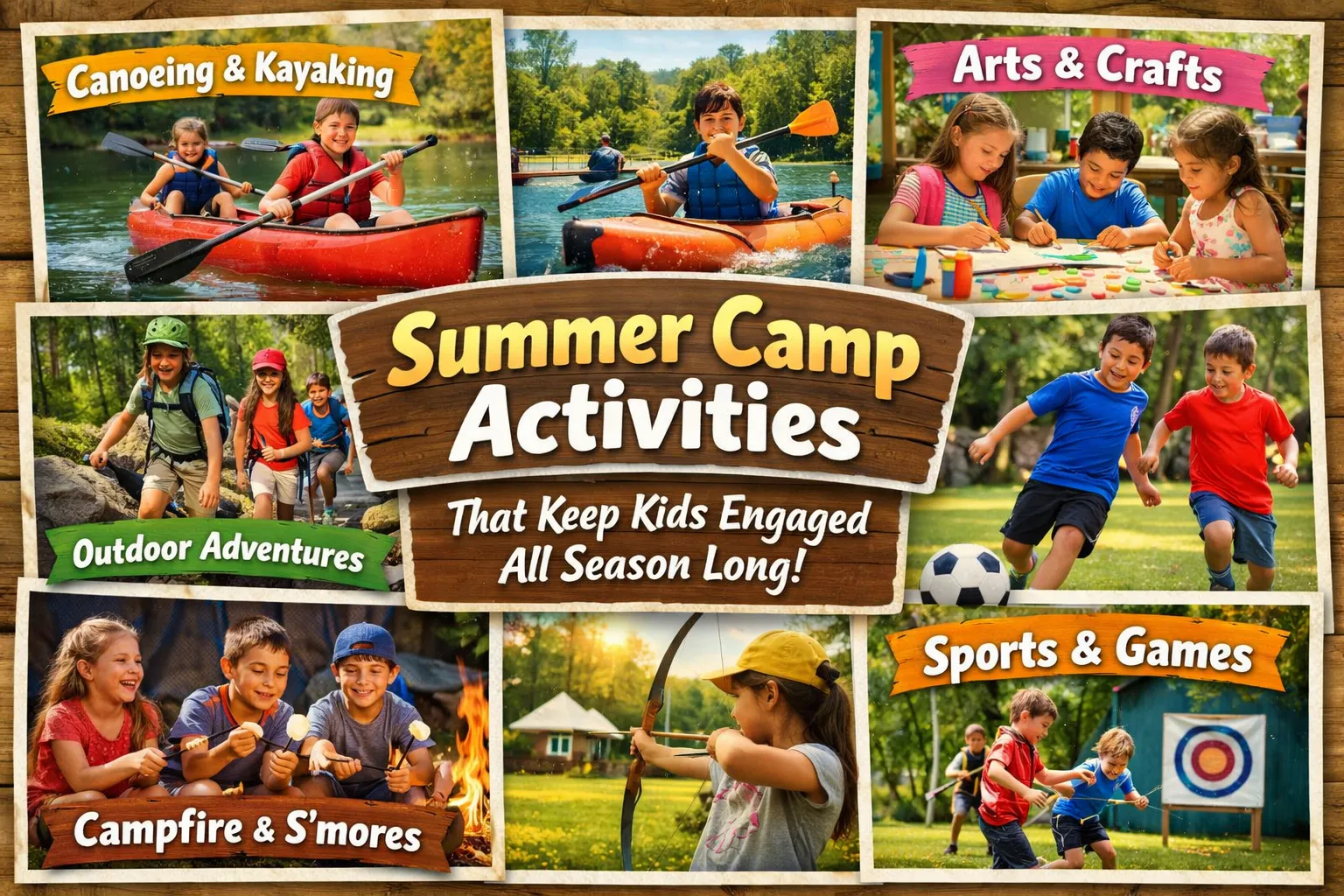
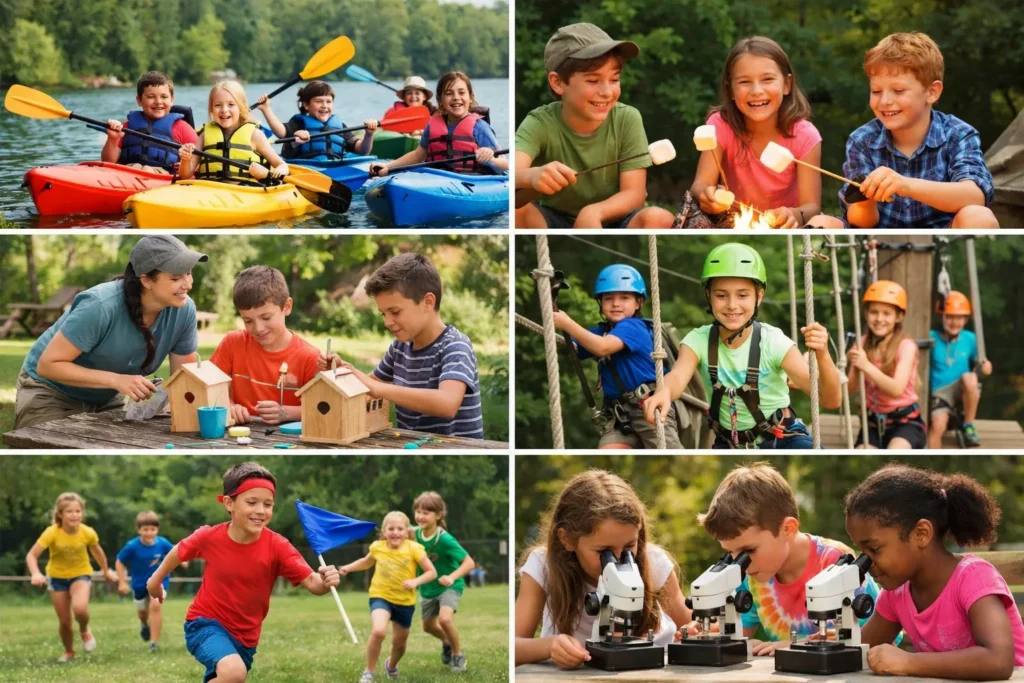
Canoeing and kayaking introduce children to water from a different angle. They learn J-strokes and draw strokes while gliding across lakes, discovering that nature feels different when you’re sitting right at the waterline. Stand-up paddleboarding has become wildly popular at camps, challenging balance and core strength while letting kids explore coves and inlets they can’t reach from shore.
Water balloon battles and slip-and-slide afternoons provide pure joy on sweltering days. These moments of controlled chaos teach kids about fair play, team strategy, and the art of a good-natured ambush. Camp counselors know that nothing bonds a cabin group faster than plotting the perfect water attack on their rivals.
Forest and Trail Exploration
Hiking transforms into treasure hunting when counselors frame it right. Kids who claim they hate walking will trek miles to reach a waterfall or find the geocache hidden by last week’s group. Trail time becomes observation time as campers spot animal tracks, identify bird calls, and learn which plants deserve respect and which make excellent walking sticks.
Rock climbing walls at camp give children their first taste of vertical challenges. Belayers teach trust while climbers learn that fear and courage often occupy the same moment. The view from the top matters less than the realization that they pushed through doubt to get there.
Nature scavenger hunts turn the woods into outdoor classrooms. Armed with lists and collection bags, kids seek specific leaves, interesting rocks, or evidence of wildlife. They return with pockets full of treasures and heads full of questions about the ecosystem surrounding them.
Creative Arts That Unlock Hidden Talents
Crafts and DIY Projects
Tie-dye stations become wearable art galleries where every camper creates something unique. The anticipation of unwrapping the rubber-banded fabric to reveal swirling patterns never gets old, regardless of age. Kids wear their creations with pride, and parents receive gifts that actually get displayed rather than hidden in drawers.
Friendship bracelet weaving teaches patience and pattern recognition disguised as social bonding. Campers spend quiet afternoon hours knotting colorful threads while sharing stories, creating both jewelry and connections. These simple bands become symbols of camp relationships that continue long after summer ends.
Pottery and clay sculpture let young artists work three-dimensionally. Pinch pots might crack in the kiln, but the process of shaping something from earth and water connects children to ancient creative traditions. Successful pieces become treasured keepsakes that remind families of camp years later.
Performance Arts That Build Confidence
Theater productions at camp operate on compressed timelines that would terrify Broadway producers. Kids audition, rehearse, learn lines, create costumes, and perform for parents within a few weeks. The magic lies not in polished performances but in watching shy campers find their voices under stage lights.
Talent shows celebrate every skill from juggling to joke-telling. The kid who can’t throw a baseball might wow the crowd with a piano piece or magic trick. These evening programs remind everyone that talent comes in countless forms and deserves recognition regardless of category.
Music sessions range from guitar circles around campfires to drumming workshops that explore rhythm across cultures. Kids who’ve never touched an instrument discover they can make music as a group, even if individual notes wobble. Songwriting activities help campers express feelings they might struggle to communicate in conversation.
Sports and Games That Teach Teamwork
Classic Camp Sports With New Twists
Capture the flag has evolved beyond simple flag-grabbing into elaborate strategy games with multiple rounds and rule variations. Teams develop complex plays, assign roles based on individual strengths, and learn that successful attacks require both bold runners and patient defenders.
Soccer, basketball, and volleyball happen daily at most camps, but the best programs emphasize fun over competition. Skill-building drills feel like games themselves, and mixed-ability teams ensure that star athletes and beginners play side by side. The goal shifts from winning to improving and supporting teammates.
Gaga ball has become a camp phenomenon, offering a gentler alternative to dodgeball that keeps everyone engaged longer. The octagonal pit becomes an equalizer where quick reflexes matter more than size or strength. Games move fast, and eliminated players jump back in quickly, maintaining energy and enthusiasm.
Team-Building Challenges
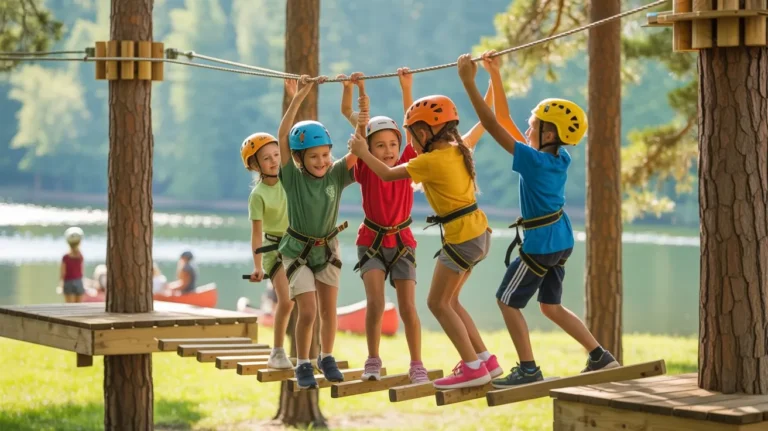
Ropes courses present physical puzzles that groups must solve together. The trust fall becomes a literal leap of faith. High ropes elements challenge individual courage while low ropes activities require collaborative problem-solving. Counselors facilitate reflection afterward, helping kids articulate what they learned about communication and mutual support.
Relay races and field day events inject friendly competition into camp life. Three-legged races, egg tosses, and tug-of-war competitions create hilarious moments and shared victories. These activities work because they level the playing field, giving every camper chances to contribute to team success.
Initiative games like human knots and group juggling focus on cooperation over competition. Campers must communicate clearly, listen actively, and adjust strategies based on feedback. These exercises translate directly to real-world situations where collaboration matters more than individual performance.
STEM Activities That Make Science Fun
Hands-On Science Experiments
Rocket building and launching combines engineering with dramatic countdowns. Kids design fins, decorate bodies, and calculate angles before sending their creations skyward. The inevitable failures teach resilience while successful flights spark genuine excitement about physics principles.
Nature science programs turn camps into field stations. Campers test water quality, observe insect life cycles, and track weather patterns. They learn scientific methods through direct observation rather than textbooks, making discoveries feel personal and immediate.
Cooking classes become chemistry lessons when counselors explain emulsification, caramelization, and fermentation. Kids mix ingredients, observe transformations, and eat their experiments. The science sticks because it connects to tangible results they can taste and share.
Technology and Innovation
Coding workshops introduce programming through games and animations rather than abstract concepts. Kids create simple video games or program robots to navigate obstacle courses. They debug problems and refine solutions, developing computational thinking without realizing they’re learning serious skills.
Digital photography and video production let campers document their experiences while learning composition, lighting, and editing. They interview friends, capture funny moments, and create end-of-summer montages that families watch repeatedly. These projects teach both technical and storytelling skills.
Robotics competitions challenge teams to build and program machines that complete specific tasks. The combination of construction, coding, and strategy appeals to different learning styles. Campers discover that engineering involves as much creativity as technical knowledge.
Specialized Programs for Unique Interests
Adventure Sports for Thrill-Seekers
Mountain biking programs teach bike handling skills on trails designed for progression. Beginners stick to gentle paths while advanced riders tackle jumps and technical sections. The sport rewards persistence, and kids who master challenging features experience tremendous pride in their accomplishment.
Archery instruction combines focus, form, and ancient tradition. The satisfying thunk of arrows hitting targets validates hours of practice. Campers learn that precision sports require mental discipline alongside physical technique, lessons that transfer to other challenging activities.
Zip-lining gives every camper a moment of pure exhilaration. The few seconds of flight become highlight reel memories that kids replay for years. Safety briefings teach responsibility, while the experience itself builds confidence in trying scary-but-controlled challenges.
Environmental and Farm Programs
Garden projects show kids where food originates and how much care growing requires. They plant seeds, pull weeds, harvest vegetables, and prepare simple dishes from their crops. The farm-to-table experience changes perspectives on nutrition and environmental stewardship.
Animal care programs at camps with livestock teach responsibility and empathy. Feeding chickens, grooming horses, or caring for rabbits creates bonds between children and animals. Kids learn that other living beings depend on consistent, gentle attention.
Conservation activities like trail maintenance and habitat restoration instill environmental ethics through action. Campers remove invasive species, plant native trees, and clean up waterways. They leave camp understanding they can actively improve natural spaces rather than just enjoying them.
Evening Programs That Create Camp Magic
Campfire Traditions
Storytelling around flames connects campers to oral traditions spanning millennia. Counselors share spooky tales that make kids huddle closer together, while campers contribute their own stories and jokes. These evenings teach the power of narrative and the art of holding an audience.
Sing-alongs and campfire songs create shared cultural experiences unique to camp. Kids learn verses to classics and make up new lyrics to familiar tunes. The songs become anthems that trigger nostalgia decades later, instantly transporting former campers back to those firelit circles.
S’mores-making elevates a simple dessert into a ritual. The precise toasting of marshmallows to individual preference, the chocolate selection debate, and the inevitable sticky fingers all contribute to the experience. These moments of sweetness punctuate longer days of activity.
Special Event Nights
Theme nights transform ordinary evenings into celebrations. Decades day, superhero night, or camp Olympics give everyone permission to embrace silliness. Campers plan costumes, participate in themed activities, and create memories distinct from regular programming.
Dance parties let kids move freely without judgment. DJ counselors read the crowd, mixing current hits with timeless classics. The energy in a room full of dancing campers reminds adults why joy needs no excuse or explanation.
Outdoor movie nights under stars combine comfort with adventure. Campers sprawl on blankets, share popcorn, and watch films that become forever associated with that summer. The experience feels special because it blends familiar entertainment with the novelty of an outdoor setting.
Life Skills Developed Through Daily Activities
Independence and Self-Sufficiency
Managing belongings, following schedules, and handling minor conflicts without parental intervention builds autonomy. Kids discover they can navigate social situations, solve problems, and make decisions independently. This confidence extends far beyond camp boundaries into school and home life.
Personal hygiene routines enforced by counselors establish habits that stick. Making beds, organizing gear, and keeping cabin spaces tidy teaches that living spaces require maintenance. These lessons sink in through daily practice rather than lectures.
Social and Emotional Growth
Living closely with peers from different backgrounds expands social awareness and cultural competence. Campers encounter diverse perspectives, family structures, and communication styles. They learn to find common ground with people who initially seem very different from themselves.
Navigating homesickness, disappointment, and conflicts develops emotional resilience. Counselors guide campers through difficult feelings rather than eliminating them, teaching coping strategies and self-soothing techniques. Kids leave camp better equipped to handle future challenges.
Leadership opportunities emerge naturally in group settings. Older campers mentor younger ones, cabin groups elect representatives, and activity periods let different kids shine. These experiences teach that leadership takes many forms and everyone can lead in some capacity.
How to Choose Summer Camp Activities for Your Child
Consider your child’s current interests alongside skills they want to develop. A child obsessed with dinosaurs might thrive in nature science programs, while a budding performer needs camps with strong arts components. Balance familiar comfort zones with gentle challenges that encourage growth.
Ask camps about their activity schedules and how they accommodate different skill levels. Quality programs offer progression within activities, allowing beginners to learn basics while giving advanced participants appropriate challenges. Mixed-skill groups work only when counselors differentiate instruction effectively.
Read reviews from other families and ask for references. Talk to camp directors about their philosophy and how they handle homesickness, conflicts, and rainy days. The best summer camp activities happen within supportive environments that prioritize emotional safety alongside physical safety.
Making the Most of Summer Camp Experience
Prepare your child by discussing expectations and addressing concerns before camp starts. Practice relevant skills at home if possible—swimming lessons before water-focused camps, tent camping in the backyard before sleepaway programs. Familiarity reduces anxiety and lets kids focus on fun rather than survival.
Pack appropriately but avoid overloading. Camps provide packing lists for good reasons—they know what kids actually need versus what parents worry about. Label everything, especially items that all campers have in common like water bottles and towels.
Trust the process and resist constant communication. Limited parent contact allows kids to fully immerse in camp culture and form independent identities separate from home. The stories they share afterward matter more than daily updates during the session.
Conclusion
Summer camp activities create more than just fun memories. They provide structured opportunities for children to discover abilities, overcome fears, and form friendships in environments designed specifically for growth. Whether your child paddles across a lake, performs in a talent show, or builds a robot, they’re developing skills and confidence that extend far beyond those summer weeks.
The best camps blend traditional favorites with innovative programming, ensuring every child finds activities that resonate. They hire counselors who understand that the goal isn’t perfecting a craft or sport but rather helping kids learn about themselves through trying new things. When camps get the balance right, children return home tired, dirty, happy, and changed in subtle but significant ways.
Your research into camp options demonstrates care for your child’s summer experience. Trust your instincts, ask good questions, and remember that the right camp for your family balances your child’s personality with the opportunities you hope they’ll discover.
FAQ: Your Summer Camp Activities Questions Answered
What types of summer camp activities are best for shy kids?
Shy children often thrive in smaller group activities that don’t put them on the spot immediately. Art programs, nature walks, and hands-on science experiments let them participate without performance pressure. Look for camps that emphasize collaborative projects over individual presentations and avoid programs that push immediate social interaction. Many quiet kids blossom through activities like pottery, photography, or animal care where they can focus on the task while naturally connecting with others who share their interests. The key is finding environments where counselors recognize different personality types and create multiple pathways for engagement.
How do camps keep activities safe while still being adventurous?
Quality camps employ certified instructors for specialized activities like climbing, water sports, and adventure programs. They maintain rigorous safety protocols, conduct regular equipment inspections, and adjust activities based on weather and participant ability levels. Risk assessment happens continuously—counselors are trained to identify when challenges become dangers. Proper ratios of staff to campers ensure adequate supervision, while age-appropriate progression means kids tackle challenges suited to their developmental stage. Camps should transparently share their safety credentials, insurance coverage, and emergency procedures with families during the registration process.
Can kids with no outdoor experience enjoy activity-focused camps?
Absolutely! The best camps assume zero prior experience and build skills from the ground level. Beginner swimming lessons, introductory hiking, and basic crafts provide entry points for everyone. Counselors differentiate instruction within activities, so experienced campers advance while newcomers learn fundamentals. Many children discover passions at camp precisely because they’re trying things unavailable at home. Programs that group kids by ability level rather than age often work best for true beginners. Ask camps directly about how they accommodate first-timers—quality programs will enthusiastically describe their approach to introducing new activities.
What should I look for in a camp’s activity schedule?
Balance is essential—look for schedules mixing active and quiet periods, group and individual time, structured and free choice activities. Camps that offer 20-minute rotations might overstimulate kids, while those with three-hour blocks might bore easily distracted children. Quality schedules include outdoor time regardless of programming focus, rest periods during hot afternoons, and evening activities that wind down energy before bed. Ask whether kids choose their activities or counselors assign them, and inquire about what happens when a child strongly dislikes a scheduled activity. Flexibility within structure indicates thoughtful programming that responds to actual children rather than idealized schedules.