
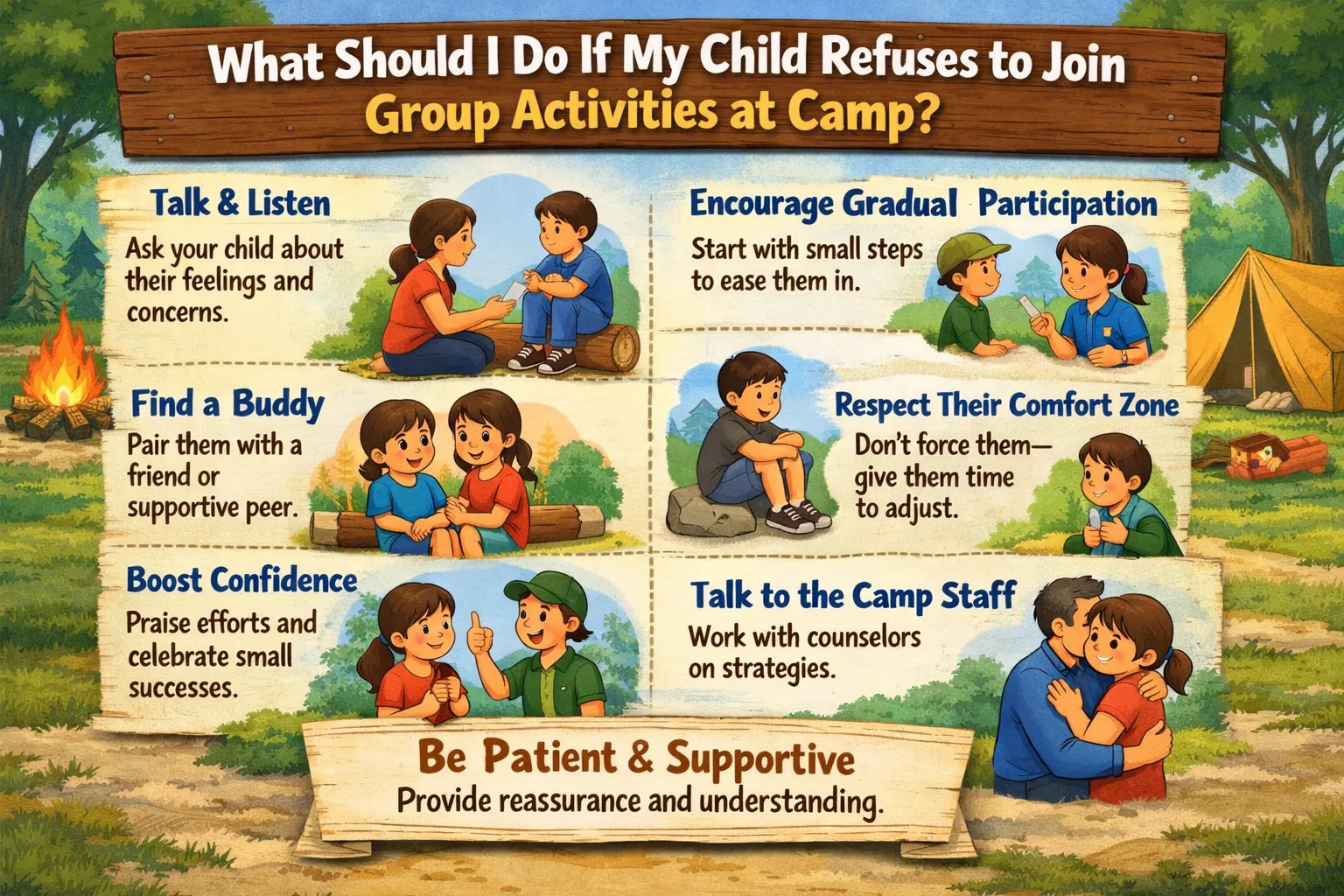
What Should I Do If My Child Refuses to Join Group Activities at Camp?
You drop your child off at camp excited about crafts, games, and new friendships. Then the counselor pulls you aside. Your child won’t participate. They’re sitting alone while everyone else plays capture the flag.
This scenario frustrates parents and worries them. You want your child to enjoy camp, make friends, and build confidence. Instead, they’re withdrawing. The good news? You can help your child overcome their hesitation and find their place in the group. Let’s explore why this happens and what you can do about it.
Why Children Resist Group Activities
Shyness and Social Anxiety
Some children feel overwhelmed in groups. New faces trigger anxiety. Loud voices create stress. Your child might worry about saying the wrong thing or looking foolish in front of strangers.
This fear feels very real to them. They’re not being difficult on purpose. Their brain perceives social situations as threatening. Understanding this helps you respond with empathy rather than frustration.
Personality Differences
Not every child thrives in group settings. Some kids are natural observers. They prefer watching before joining. Others feel drained by constant social interaction and need quiet time to recharge.
Your child might be an introvert. Camp environments often favor extroverted children who jump into activities immediately. Introverts need a different approach. They participate best when they can ease into situations gradually.
Previous Negative Experiences
Past rejection stings. Your child might have been excluded from a game at school. Maybe someone laughed at their attempt during a previous camp activity. These memories create protective walls.
Children remember social pain vividly. One bad experience can make them hesitant to try again. They’d rather avoid the activity entirely than risk another hurtful moment.
Lack of Confidence
Your child might doubt their abilities. They see other kids running faster, singing louder, or creating better art projects. This comparison makes them feel inadequate.
Fear of failure paralyzes them. They think, “If I can’t do it perfectly, I won’t do it at all.” This perfectionist mindset keeps them on the sidelines.
Sensory Sensitivities
Some children struggle with sensory input. Loud music hurts their ears. Crowded spaces feel suffocating. Certain textures in craft activities make them uncomfortable.
According to research from the Child Mind Institute, sensory processing issues affect how children experience their environment. What seems like refusal might actually be sensory overload.
What You Can Do Before Camp
Talk to Your Child
Start a conversation at home. Ask what worries them about group activities. Listen without judgment. Your child needs to feel heard, not lectured.
Use open-ended questions. “What do you think camp will be like?” works better than “Are you excited for camp?” Create space for honest answers. Sometimes children need time to articulate their feelings.
Practice Social Skills
Role-play common camp scenarios. Pretend you’re both at camp meeting new kids. Practice introducing themselves. Act out joining a game already in progress.
Make it fun, not formal. Turn it into a game. This rehearsal builds confidence. Your child develops a mental script for real situations.
Visit the Camp Beforehand
Familiarity reduces anxiety. Tour the camp with your child before the session starts. Show them where activities happen. Point out bathrooms, the lunch area, and quiet spaces.
Meeting counselors early helps too. Your child sees friendly faces on day one instead of strangers. This small step makes a big difference.
Set Realistic Expectations
Don’t promise your child will love every activity. Instead, explain that camp offers variety. Some activities will appeal to them more than others.
Suggest they try each activity once. Frame participation as an experiment, not a commitment. This approach feels less pressuring. It gives your child permission to have preferences.
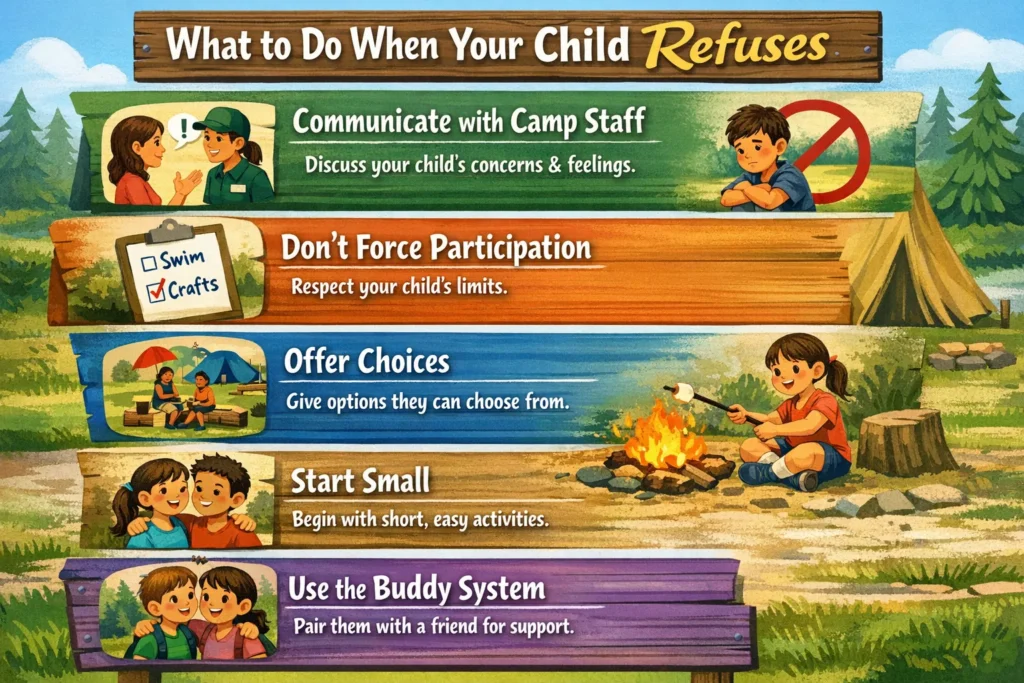
What to Do When Your Child Refuses
Communicate with Camp Staff
Talk to the counselors immediately. They’re trained to handle reluctant participants. Share what you know about your child’s personality and triggers.
Counselors can modify their approach based on this information. They might pair your child with a buddy or give them a specific role in group activities. Communication creates a support team.
Don’t Force Participation
Forcing your child into activities backfires. It increases anxiety and creates power struggles. Your child associates camp with stress instead of fun.
According to experts at Psychology Today, pressure to participate often strengthens resistance. Children shut down when they feel cornered.
Offer Choices
Give your child some control. Ask which activity they’d like to try first. Let them choose between two options. This autonomy makes participation feel less threatening.
Even small choices matter. “Do you want to sit near the front or back during story time?” This question acknowledges their needs while encouraging involvement.
Start Small
Your child doesn’t need to join full group activities immediately. Suggest watching from the edge first. Then maybe standing closer. Eventually, they might join for a few minutes.
Celebrate small steps. If your child speaks to one new person, that’s progress. If they participate for five minutes instead of zero, praise the effort.
Use the Buddy System
Ask counselors to pair your child with another camper. Sometimes one-on-one interaction feels safer than large groups. A friendship with one child can open doors to group participation.
Look for another quiet child. Two shy kids often connect well. They understand each other’s hesitation and support one another.
Strategies That Work During Camp
Identify Your Child’s Strengths
Every child excels at something. Your child might love animals, art, or building things. Work with counselors to connect these interests to camp activities.
When children use their strengths, confidence grows. Your nature-loving child might lead a nature walk. Your artistic child might help decorate the camp bulletin board.
Create Special Roles
Give your child a job during group activities. They could be the scorekeeper, timer, or equipment manager. These roles involve participation without spotlighting them.
Responsibilities make children feel valued. They contribute to the group without performing in ways that trigger anxiety. Purpose drives engagement.
Allow Observation Time
Some children need to watch before doing. Permit this. Let your child observe the activity while sitting with the group. They’re still present, absorbing information.
Observation is a valid form of participation. Your child learns rules, watches techniques, and builds courage. Many eventually join when they feel ready.
Schedule Breaks
Constant social interaction exhausts some children. Request that counselors allow your child quiet breaks. Ten minutes alone can recharge their batteries.
A break doesn’t mean failure. It’s self-care. Your child learns to recognize their limits and ask for what they need. These are valuable life skills.
Focus on Progress, Not Perfection
Notice improvements, however small. Your child made eye contact with another camper. They sat closer to the group today. They held the craft supplies even if they didn’t make anything.
Each tiny step deserves recognition. Your attention reinforces positive movement forward. Children repeat behaviors that receive praise.
Working with Camp Counselors
Share Detailed Information
Tell counselors what works at home. Does your child respond better to gentle encouragement or direct requests? Do they prefer female or male authority figures? What topics interest them?
The more counselors know, the better they can help. Share triggers too. “Loud noises overwhelm them” or “They shut down when singled out in front of groups.”
Request Regular Updates
Ask counselors to check in with you daily. Brief updates help you address issues quickly. You can strategize together when problems arise.
These conversations also highlight successes. Counselors might notice progress you wouldn’t see during pickup. Positive reports that you can celebrate with your child later.
Develop a Signal System
Create a simple system for your child to communicate with counselors. A hand signal might mean “I need a break.” A code word could indicate “This is too much.”
This system gives your child control without requiring lengthy explanations. Counselors can respond quickly to prevent meltdowns.
Ask About Modifications
Can counselors modify activities for your child? Maybe your child joins the game for half the time instead of the full session. Perhaps they participate in a smaller subset of the larger group.
Good programs offer flexibility. They want every child to succeed. Most counselors willingly adjust when they understand the need.
When to Seek Additional Help
Persistent Extreme Anxiety
Some anxiety is normal. Extreme, persistent anxiety requires professional support. Watch for physical symptoms like stomachaches, headaches, or difficulty breathing when camp is mentioned.
Consult your pediatrician if anxiety interferes with daily life. A child therapist can teach coping strategies. Early intervention prevents bigger issues later.
Complete Withdrawal
Your child refuses to leave your car. They cry inconsolably every camp day. They hide when it’s time to leave home. This level of distress goes beyond typical adjustment.
Professional guidance helps. A therapist can determine if underlying issues need addressing. Sometimes social anxiety disorder or other conditions require treatment.
No Improvement Over Time
Most children adjust within a week or two. They might still prefer some activities over others, but extreme resistance fades. If weeks pass with no progress, dig deeper.
Talk to school teachers. Does your child struggle in group settings there too? Consistent patterns across environments suggest the need for professional evaluation.
Building Long-Term Confidence
Encourage Group Activities Year-Round
Camp shouldn’t be the only group experience. Enroll your child in small classes or clubs during the school year. Sports teams, art classes, or scout groups provide practice.
Regular exposure builds comfort. Your child develops social skills gradually. They learn that groups can be enjoyable and safe.
Celebrate Social Courage
Praise brave social moments. Your child invited someone to play. They spoke up in a group. They tried a new activity despite fear.
Recognition reinforces courage. Your child learns that taking social risks leads to positive outcomes. This builds a foundation for future confidence.
Model Social Participation
Children learn by watching. Let them see you joining group activities. Talk about your own nervousness before trying something new. Show them how you cope with social anxiety.
Your vulnerability normalizes their feelings. They see that adults feel nervous too but participate anyway. This example teaches resilience.
Teach Self-Advocacy
Help your child articulate their needs. Practice phrases like “I need a minute” or “Can I watch first?” These skills serve them throughout life.
Self-advocacy empowers children. They learn they can influence their environment without shutting down. This confidence transfers to school, friendships, and eventually workplace settings.
The Importance of Patience
Change takes time. Your child won’t transform into a social butterfly overnight. Some children always prefer smaller groups or quieter activities. That’s okay.
Your goal isn’t to change your child’s personality. You’re helping them navigate social situations without debilitating anxiety. You’re teaching them that stepping outside their comfort zone won’t destroy them.
Accept your child as they are. Introversion isn’t a flaw that needs fixing. Shyness doesn’t make someone less valuable. Work with your child’s nature, not against it.
Camp provides opportunities for growth. Your child can develop social skills at their own pace. With support, understanding, and patience, they’ll find their place in the group.
Creating Positive Camp Memories
The camp experience should build confidence, not destroy it. When handled well, even reluctant participation teaches valuable lessons. Your child learns they can face fears. They discover unexpected joys. They make connections they didn’t think possible.
Years from now, your child might remember camp fondly. Not because they loved every minute or participated in everything. They’ll remember the counselor who understood them. The one friend who made them feel included. The activity they finally tried that became their favorite.
These moments matter more than perfect participation. Focus on small victories. Celebrate courage over compliance. Trust that your child is learning and growing, even when progress seems invisible.
Your support makes the difference. When you advocate for your child while encouraging gentle challenges, you create conditions for success. Your child feels both protected and pushed toward growth. This balance helps them thrive, not just at camp, but in life.
Conclusion
Your child’s refusal to join group activities at camp doesn’t mean failure. It signals a need for a different approach. Understanding the root cause helps you respond effectively.
Work with camp staff. Start small. Celebrate progress. Some children need more time than others to warm up to group settings. That’s completely normal. Your patience and support help your child build the confidence they need to participate at their own pace. Camp can still become a positive experience, even if it doesn’t look exactly like you imagined. Trust the process, trust your child, and trust that growth happens in its own time.
FAQ: Common Questions About Children and Camp Group Activities
Why does my child participate in group activities at school but not at camp?
School feels familiar because your child knows the routine, the building, and many of the children. Camp presents an entirely new environment with strangers and unfamiliar activities. This newness triggers anxiety even in children who seem socially confident at school. The lack of structure they’re used to can feel overwhelming. Give your child time to adjust to the camp environment. Most children transfer their school social skills to camp once they feel comfortable in the new setting.
How long should I wait before pulling my child out of camp if they won’t participate?
Wait at least two weeks before making this decision. Most children need five to ten camp sessions to adjust fully. The first few days often look rough as children navigate new social dynamics and routines. By week two, you’ll see clearer patterns. If your child shows small signs of progress—even just sitting closer to the group or talking to one counselor—keep going. Only consider withdrawal if your child experiences severe distress that doesn’t improve or if camp staff report concerning behaviors that suggest deeper issues needing professional attention.
Should I reward my child for participating in camp activities?
Avoid material rewards for basic participation because this can create problematic patterns. Your child might participate only when rewards are offered. Instead, use natural consequences and specific praise. Notice effort: “I heard you played one round of kickball today. That took courage.” Celebrate feelings: “You tried something scary and survived. How does that feel?” Consider small privileges at home like extra story time or choosing dinner. These acknowledge their brave work without turning participation into a transaction that requires constant escalation.
What’s the difference between respecting my child’s personality and letting them avoid challenges?
Respecting personality means understanding your child’s natural tendencies and working within them. An introverted child might need smaller groups or observation time before joining. Avoiding challenges means allowing your child to skip all uncomfortable situations without any attempt to participate. The key difference lies in gentle exposure with support versus complete avoidance. Push your child slightly beyond their comfort zone while providing tools to cope. If your child never tries anything that makes them uncomfortable, they don’t build resilience. Find the balance between honoring who they are and encouraging growth toward who they can become.
